


Villisca by Roy Marshall

    "The True Account of the Mass Murders that Stunned the Nation"

J

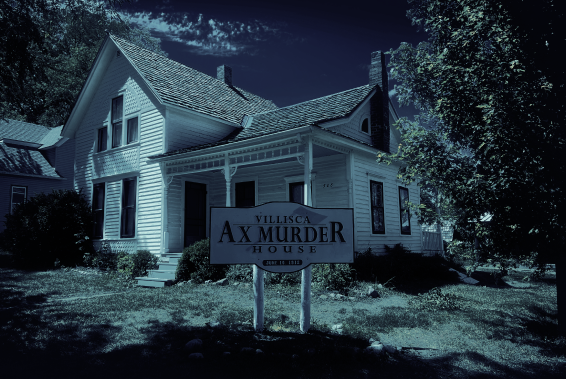
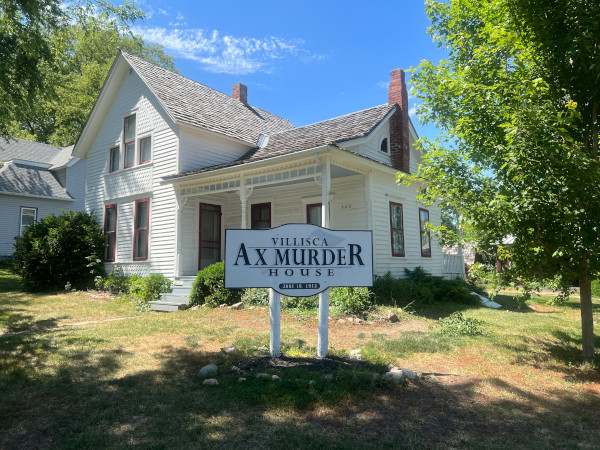
"In the sleepy little farming community of Villisca, Iowa, nothing much ever happened. Neighbors knew each other, and life revolved around agriculture, church and family. Few people ever locked their doors and windows at night or even owned locks. Until the morning of June 10th, 1912 that is...

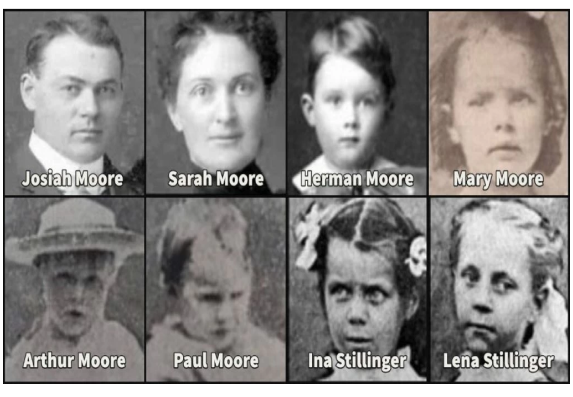
The evening before; Joe and Sarah Moore attended church services where their four young children, Herman, Katherine, Boyd, and Paul had paricipated in the program. Little Katherine was particularly joyful as her girlfriends, sisters Ina and Lena Stillinger would be sleeping over that night.

The Moores were well liked in the community. When their mutilated bodies along with those of the Stillinger girls were found the next day - victims of a brutal axe murder, shockwaves of fear reverberated throughout Villisca and the nation, igniting a controversy that rages yet today." Price $22.95 includes shipping and handling.

Roy Marshall is a retired Law Enforcement Officer and a resident of Iowa. Mr. Marshall became fascinated with what is still considered one of the most violent unsolved crimes in United States history. Roy's years of exhaustive research into the case eventually evolved into his new book, simply titled "Villisca". A good friend of Darwin and Martha Linn and a frequent visitor to the Olson Linn Museum, Roy also spoke at the Commmerative Weekend of the Axe Murders in 2003 and has appeared at several other Villisca events.

THE VILLISCA AXE MURDERS:A SEARCH FOR THE TRUTH


           "Seldom has a crime fostered so many falsehoods and rumors that became a part of local folklore as did the Villisca axe murders.  This is in part is because of the enormity of the crime.  A community trying to come to grips with what had taken place had first to absorb the unthinkable—that some person or persons had entered the home of a loving and respected family and, in the dead of night, wielded an ax to crush beyond recognition the heads of six sleeping children and two adults.  As the shock passed, fear set in; who would be next?  When would this monster strike again?  Then, of course, the unanswered questions, the uncertainty, the enduring absence of closure.

            The void of knowledge was filled with speculation, rumor, and unfounded accusations.  Decades later, when I began my research, I encountered Villisca residents who firmly and fervently believed Senator F. F. Jones was either guilty or not guilty.  When asked “why?” their reply was often that an ancestor had some inside knowledge.  No real evidence, but if Grandpa Clarence or Dear Aunt Mabel, who had been around at the time, said it was true then it must be. 

The mystery was heightened by a badly mismanaged crime scene and, to a larger extent, by a cast of characters worthy of a Dickens novel. 

-James Wilkerson, a private detective attracted to ladies and conspiracy theories.         

-Jack Boyle, a hard-drinking opium addict, newspaper reporter and would-be detective who later gained fame with his “Boston Blackie” tales.   

-Alice Willard, a favorite of traveling salesmen and a woman who waited four years to reveal her shocking account. 

-Frank Jones, powerful and wealthy banker and state senator who answered an attack with an attack. 

-Dona Bentley Jones, called the prettiest woman in the county by some, a nymphomaniac by others. 

-John Warren Noel, a young photographer who fell under the detective’s influence and forfeited his life. 

-Mae Noel, his widow, who fell under the detective’s influence and forfeited her reputation. 

-L. G. J. Kelly, a deranged and perverted minister who said he was directed to kill by the voice of God bidding him to “suffer the little children to come unto me.”  

-William “Blackie” Mansfield, a sausage stuffer who became a suspect in the Villisca case when his estranged wife and child were bludgeoned to death with an axe.        

Lawyers, judges, burglars, bootleggers, newspapermen, traveling salesmen, politicians, detectives both professional and amateur—some seeking the truth, others obstructing it—all played a role in the aftermath of the worst crime in Iowa history.

There were clues:  sheets and clothing draped over mirrors and panes of reflective glass, the axe, a slab of bacon, a lamp, locked doors, gouge marks in the ceiling marking the upswing of the ax., and finally,  the peculiar and perhaps posed position of a female victim.       

Three theories were eventually to emerge.

            (1) Some believed a serial killer was responsible.  A “fiend incarnate” was the term used by a local newspaper, a monster traveling by train, killing when the urge struck and the opportunity presented.  Perhaps the killer was one man, perhaps a cult, but there were those who thought multiple murders in several states were the work of the same perpetrator.

            (2) Detective Wilkerson advanced what came to be called ‘the Jones case,’ alleging that Senator Frank Fernando Jones, goaded by jealousy and anger resulting from a tangled and sordid sexual relationship, hired an assassin and forged an intricate scheme to evade justice. 

            (3) A grand jury indicted and the state prosecuted Reverend Kelly, an itinerant minister who was a visitor at the Children’s Day church services participated in by the victims on the night of the slayings.  His acquittal, the culmination of two bizarre and sensational trials, confirmed the belief of those who maintained he was being framed.              

The truth?  The truth, nearly a century after the crime, can be known only to the extent that one is willing to believe.  I have studied the grand jury records, trial transcripts, witness statements, investigative reports, coroner’s inquest, newspaper articles, crime scene analysis, weighed evidence and tendencies and profiles and reached a conclusion.  But my conclusion differs from that of other rational people who have done similar research.  

Time and events have put the destination beyond our reach.  We have only the journey.  But that journey—the quest for facts that will let us know the killer and understand the cause and effect of events set in motion on that night in 1912—is to delve into a study of the good and bad, the strengths and weaknesses, in people then and now.

The identity of the killer is not “revealed” in my book.  I have instead explored the crime, the evidence, the people, and attempted to present their views and conclusions.  The book represents my journey.  The destination is yours.


© 2009 Villisca Axe Murder House villiscaiowa.com. Any reproduction of villiscaiowa.com, trademarked logos or any content within this site without express permission is forbidden.